24/7 Emergency Ceiling Water Damage Repair in Hicksville
24/7 emergency ceiling water damage repair in Hicksville and surrounding areas. IICRC-certified technicians, insurance billing accepted. Call (631) 831-1880.
Water coming through the ceiling in Hicksville? We answer 24/7. Call now and our crew heads out to stop the leak damage and start drying.
Water coming through the ceiling rarely means a bad day is over, it means the clock started. A brown ring spreading across drywall, a bubble forming in the paint, or a steady drip landing in a bucket all point to water pooling above the finished surface, often for hours before it ever broke through. By the time a stain appears, the insulation, drywall backing, and sometimes the framing above it have already been wet long enough for materials to start breaking down. Ceiling water damage repair in Hicksville calls for a different approach than a flooded floor: gravity, hidden cavities, and the risk of collapse all change the math.
What Ceiling Water Damage Repair actually involves
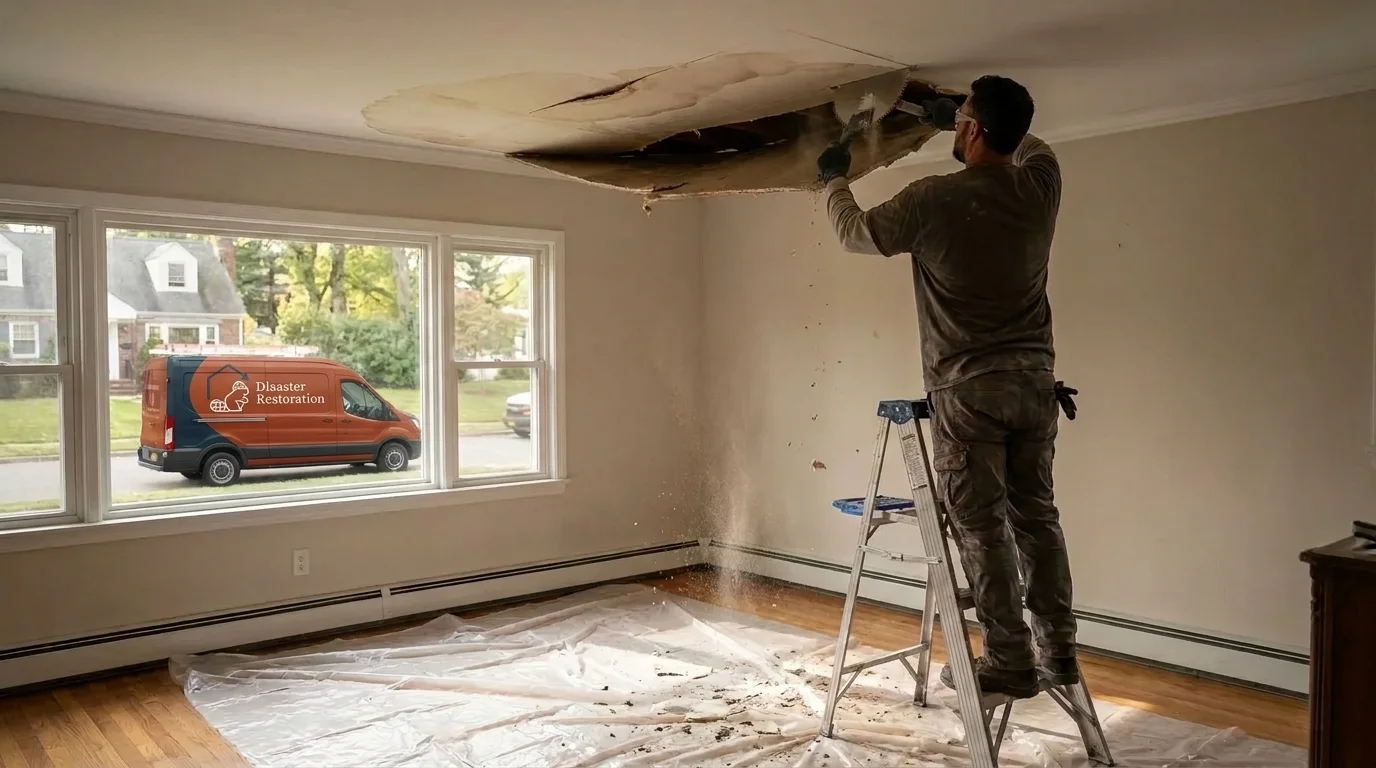
A leaking ceiling is a symptom, not the problem. The actual source could be a failed supply line in the floor above, a roof penetration, an overflowing tub, or condensation from an HVAC line running through the attic. Repair starts with finding that source, because patching drywall over an active leak just hides it until the next rain or the next shower. Technicians use moisture meters and thermal imaging to map how far the water traveled laterally along joists and trusses, since water rarely stays confined to the spot where it’s dripping. Depending on how saturated the material is, the ceiling assembly may need controlled drying with air movers and dehumidifiers before any drywall, insulation, or texture work begins. A ceiling that’s sagging or spongy to the touch has usually absorbed enough water that the drywall has lost its structural integrity and needs to come down, not just dry out in place.
Our process
- Source identification and moisture mapping. Before any repair work starts, we trace the leak back to its origin, plumbing, roofing, or appliance, and map how far water has spread through the ceiling cavity with moisture meters and infrared imaging.
- Containment and safety assessment. Sagging drywall or a ceiling holding standing water above it is a collapse risk. We assess load and, when needed, relieve pressure by controlled drainage before anyone works beneath it.
- Material removal and structural drying. Saturated drywall, insulation, and texture that won’t recover are removed. Framing and remaining materials are dried in place using air movers and dehumidifiers, with moisture readings logged until they return to a dry standard.
- Repair and refinish. New drywall is hung, taped, and finished to match existing texture, then primed and painted. If the leak originated from plumbing or roofing outside our scope, we coordinate so that repair happens before we close the ceiling back up.
- Final moisture verification. We recheck the repaired area and surrounding framing to confirm no trapped moisture remains before calling the job complete.
What separates a good ceiling water damage response from a bad one
The most common mistake is cosmetic: cutting out the visible stain, patching it, and painting over it without ever confirming the ceiling cavity above is dry. Water travels along the top of drywall and down the path of least resistance, so the wet area is almost always larger than the stain suggests. A rushed repair closes that cavity back up with moisture still trapped in insulation or framing, which sets up conditions for the material to deteriorate further behind a freshly painted surface. Insurance adjusters reviewing a ceiling claim typically want documented moisture readings showing the affected area before and after drying, photos of material removed, and a clear link between the source of the leak and the damage pattern. A repair without that documentation is harder to support if a related issue shows up later. Technicians trained to IICRC water and structural drying standards know to dry the assembly to a verified standard rather than a visual guess, and to flag framing that needs to be addressed structurally, not just cosmetically.
What does Ceiling Water Damage Repair cost?
Costs depend on how much of the ceiling is affected, whether insulation and framing need replacement, and how the texture and paint need to be matched. These figures reflect typical industry ranges, not a quote: every ceiling is different once the drywall comes down, which is why we provide a written scope before any work begins. Homeowners insurance often covers ceiling damage caused by a sudden plumbing failure or storm event, but typically excludes damage from long-term neglect, such as an undetected slow roof leak.
| Scenario | Typical range |
|---|---|
| Small stained area, no drywall removal | $250 - $650 |
| Single room ceiling patch with drywall replacement | $600 - $1,800 |
| Ceiling section with insulation replacement | $1,200 - $3,000 |
| Multi-room ceiling damage from a roof or pipe failure | $3,000 - $7,500 |
| Structural repair involving joists or trusses | $5,000 - $12,000+ |
Seasonal & regional considerations
Long Island’s older housing stock, much of it built from the 1950s through the 1970s, often has plaster or early drywall ceilings with plumbing runs overhead that weren’t designed with easy access in mind. Winter freeze-thaw cycles put stress on attic plumbing and ice-damming can force water under roofing and through ceiling insulation in homes with inadequate attic ventilation. Humid Long Island summers can also mask a slow leak for longer, since ambient moisture already keeps drywall at a higher baseline than in drier climates, delaying the point at which a stain becomes visible.
Service area
We repair ceiling water damage throughout Hicksville and surrounding Nassau and Suffolk County communities, working in the split-levels, capes, and colonials that make up much of the area’s housing stock.
A ceiling that’s staining, sagging, or actively dripping needs an assessment, not a guess. Call (631) 831-1880 to schedule a ceiling water damage inspection and get a written repair scope before the damage spreads further.
Frequently Asked Questions
Does homeowners insurance cover ceiling water damage repair?
My ceiling is sagging but hasn't collapsed yet, is it safe to wait?
How do you find the source of a ceiling leak if I can't see where it's coming from?
Will you match the texture and paint on my ceiling repair?
What happens if there's mold on the ceiling once the drywall is removed?
Looking for the best ceiling water damage repair company in Hicksville?
DISASTER RECOVERY 24/7 SPECIALISTS.COM provides ceiling water damage repair in Hicksville, NY and the surrounding area, and has served local property owners since 2008. Customers rate us 5.0 out of 5 stars across 18 Google reviews. We answer calls 24/7 — call (631) 831-1880 for immediate help.
Need Ceiling Water Damage Repair now?
We respond 24/7 across Hicksville and surrounding NY cities.