TL;DR: In New York, water damage restoration typically runs $300 to $700 for a small clean-water extraction and $3,000 to $12,000 or more for a multi-room flood or sewage backup. The biggest cost drivers are the water category (clean, gray, or black), how many square feet are affected, and how fast drying starts. Homeowners insurance usually covers sudden losses like a burst pipe, but gradual leaks, flooding, and sewer backups each have their own coverage rules.
If you’re standing in a wet living room on Long Island trying to figure out whether this is a $500 fix or a $10,000 job, the honest answer is: it depends on what kind of water it is and how long it sat. A supply line that burst an hour ago behaves very differently, cost-wise, than a sewer backup that’s been soaking a finished basement in Levittown or Plainview overnight.
How Much Does Water Damage Restoration Cost in New York?
Most New York homeowners pay somewhere between $1,200 and $7,000 for a typical single-incident water damage job, with small clean-water extractions costing less and sewage or whole-house losses costing more. The number is driven almost entirely by category of water and the square footage affected, not by which company you call.
Here’s a realistic range by scenario, based on typical industry pricing for the New York metro area:
| Scenario | Typical Cost Range |
|---|---|
| Small area extraction only, Category 1 (clean) water | $300 - $700 |
| Single room, clean water, with air movers and dehumidifier | $1,200 - $3,500 |
| Multi-room flood, Category 2 (gray) water | $3,000 - $7,000 |
| Category 3 (sewage/black water) cleanup | $5,000 - $10,000+ |
| Finished basement flood with structural drying | $4,000 - $12,000 |
| Whole-house large loss | $15,000 and up |
These are typical ranges, not a quote. Every loss is different, and a written scope of work after an on-site inspection is the only way to know the real number for your property.
What Factors Drive the Cost of Water Damage Restoration?
The water’s category, the affected square footage, and how quickly mitigation starts are the three biggest factors, according to the IICRC S500 standard that the restoration industry follows. Everything else on the invoice flows from those three variables.
Category 1 (clean) water, like from a supply line or water heater, is the cheapest to remediate because materials can often be dried in place rather than torn out. Category 2 (gray water), such as washing machine discharge or groundwater seeping through a foundation, usually means more porous material removal. Category 3 (black water), which includes any sewer or drain backup, flood water from outside, or a toilet overflow with feces, requires antimicrobial treatment, full PPE for the crew, and typically removal of affected drywall and flooring rather than drying it.
Square footage and ceiling height matter because they determine how many air movers and dehumidifiers the drying plan needs. A finished Nassau County basement with drywall, carpet, and a dropped ceiling costs more to dry than an unfinished crawl space with the same square footage. Response time matters too: mold can begin growing on wet materials within 24 to 48 hours (EPA), so a delayed call often turns a drying job into a drying-plus-mold-remediation job.
Code upgrades can add cost on older Long Island housing stock. A 1950s cape in Levittown or Hicksville with original plumbing or knob-and-tube wiring sometimes triggers electrical or plumbing updates during reconstruction that a newer home wouldn’t need.
Will Homeowners Insurance Cover the Cost?
Most standard homeowners policies cover sudden, accidental water damage, such as a burst pipe or a failed appliance hose, but they exclude gradual leaks and wear and tear. Whether your specific loss is covered depends on the cause, not just the water itself.
A pipe that splits during a hard freeze or a washing machine hose that suddenly fails is typically a covered peril. A slow leak behind a wall that’s been dripping for months usually is not, because insurers treat that as a maintenance issue. Flood damage from rising water, storm surge, or an overflowing creek is excluded from standard homeowners policies entirely; that requires a separate flood policy through the National Flood Insurance Program or a private flood carrier.
Sewer backups and sump pump failures are a common point of confusion. These are only covered if you’ve added a water backup (sewer/sump) endorsement to your policy; a standard policy without that endorsement typically denies these claims. Check your declarations page before you assume you’re covered. For a broader walkthrough of what’s typically in and out of scope, see our guide on whether homeowners insurance covers water damage, and the Insurance Information Institute’s overview of standard homeowners coverage.
Whatever the cause, document everything: photos before any cleanup, a list of damaged contents, and receipts for any temporary repairs. DISASTER RECOVERY 24/7 SPECIALISTS.COM provides moisture readings, scope documentation, and drying logs that adjusters use to evaluate claims.
What Happens During the Restoration Process?
A typical water damage job moves through four phases: inspection, extraction, drying, and repair. Each phase has its own cost and its own timeline, which is why a full invoice breaks the job down rather than quoting one flat number.
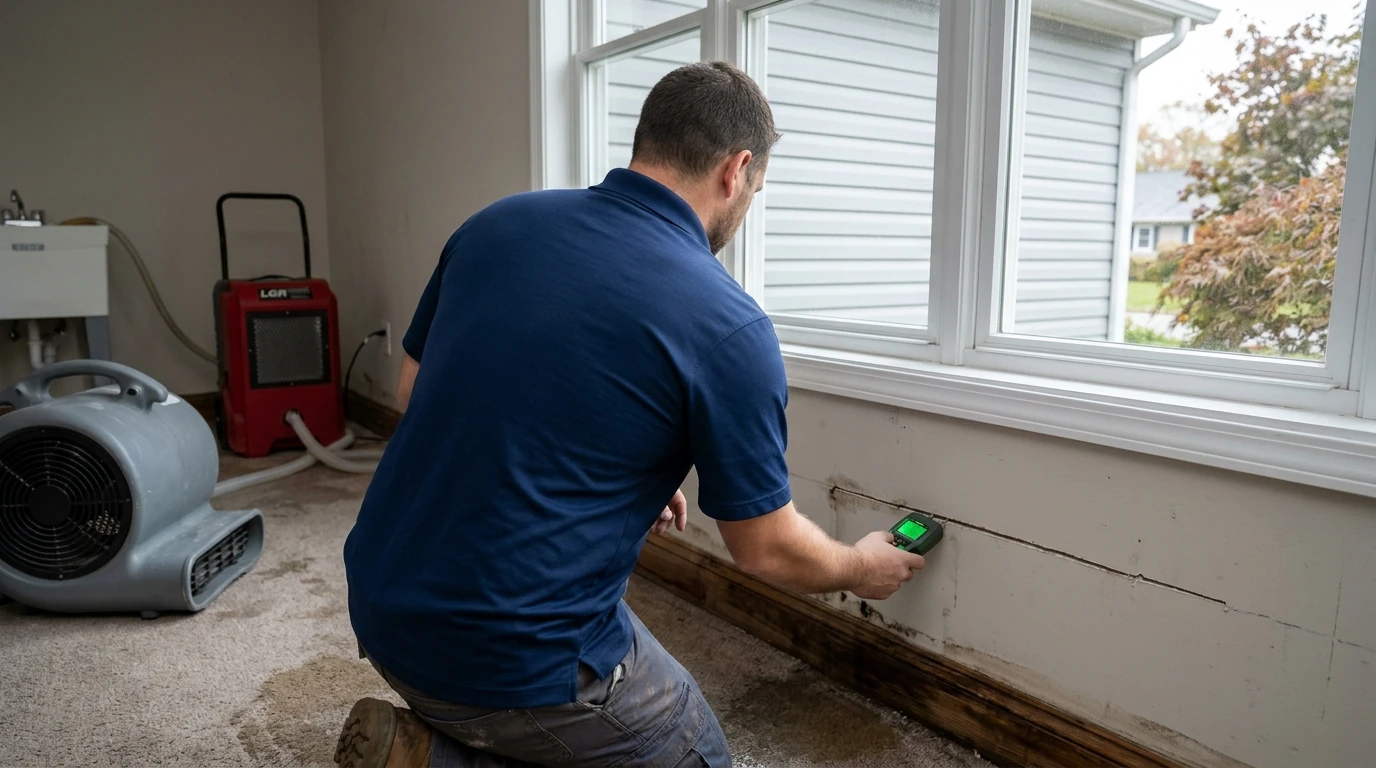
- Inspection and moisture mapping. A technician uses a moisture meter and thermal imaging to map how far the water traveled, including inside wall cavities, before any equipment goes down.
- Water extraction. Truck-mounted or portable extractors remove standing water. This phase is fast, usually a few hours, and is the smallest line item on most invoices.
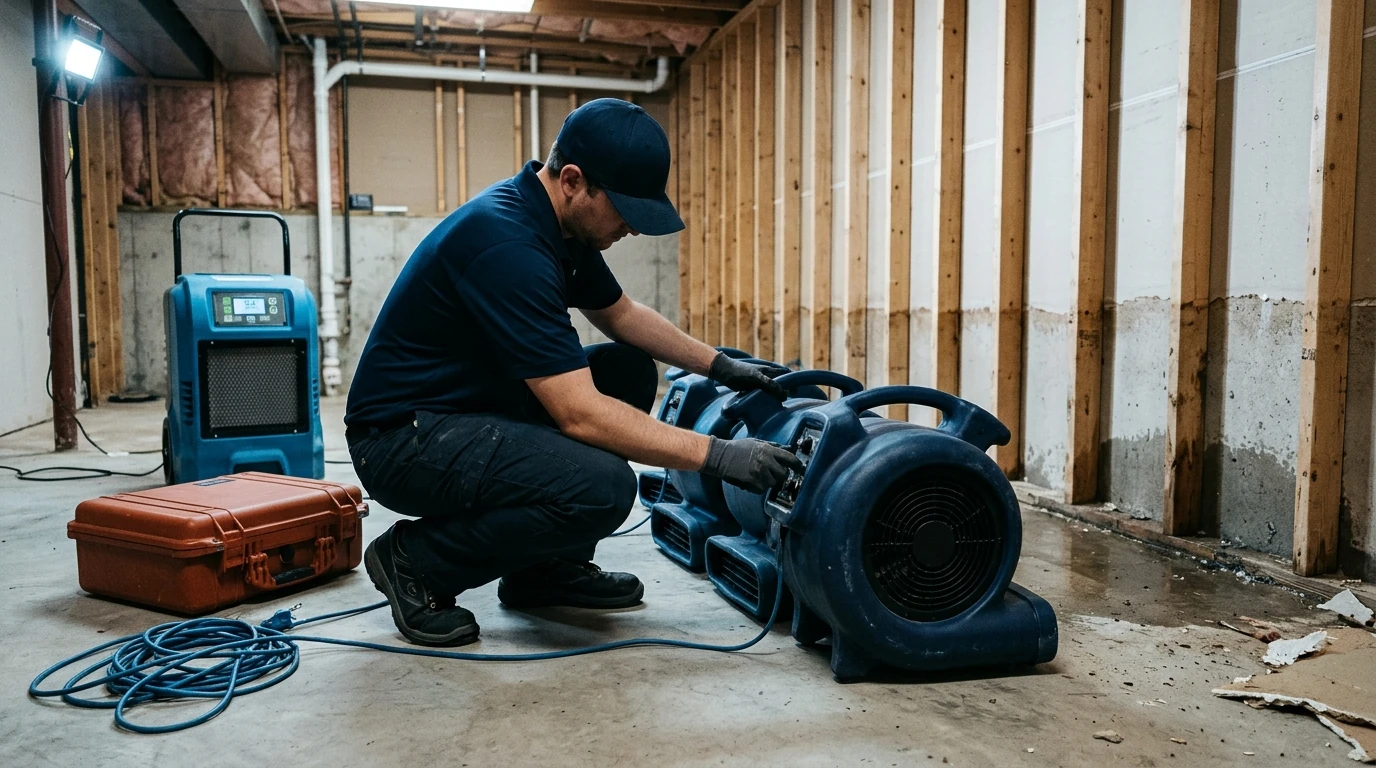
- Drying and dehumidification. Air movers and LGR dehumidifiers run for typically 3 to 5 days, with daily moisture checks to confirm materials are drying on schedule rather than trapping moisture behind finishes.
- Cleaning, antimicrobial treatment, and repair. Affected materials are cleaned or removed, antimicrobial is applied where contamination occurred, and reconstruction (drywall, flooring, trim) closes out the job.
If your basement flooded within the past day, our guide to the first 24 hours after water damage walks through what to do before a crew arrives.
What Should You Do Next?
The single most useful thing you can do right now is get a written scope of work before any demolition starts, not after. A scope gives you a real number for your property instead of a general range, and it gives your insurer the documentation they need to process the claim.
DISASTER RECOVERY 24/7 SPECIALISTS.COM inspects the affected area, maps moisture with meters and thermal imaging, and provides that written scope before any work begins. If the water involved a drain or sewer line, our sewage cleanup team handles the Category 3 protocols directly; if the drying reveals a hidden source, our water leak detection team can locate it.
A burst pipe at 2 a.m. doesn’t wait for business hours, and neither should the response. Getting water out and drying started within the first day is what keeps a $1,500 job from becoming a $7,000 one.
About DISASTER RECOVERY 24/7 SPECIALISTS.COM
DISASTER RECOVERY 24/7 SPECIALISTS.COM employs IICRC-certified technicians (WRT, FSRT, AMRT, ASD) serving Hicksville and surrounding Long Island communities since 2008. The company is licensed and insured, holds a 5.0 Google rating across 18 reviews, and operates 24/7. This post was prepared with input from Neil Roman and the DISASTER team, who handle water damage restoration, sewage cleanup, mold remediation, fire and smoke damage restoration, water leak detection, crawl space encapsulation, and reconstruction across Hicksville, Hempstead, Levittown, Freeport, Plainview, Massapequa, Syosset, Westbury, and Bethpage.
Need help now? Call DISASTER RECOVERY 24/7 SPECIALISTS.COM at (631) 831-1880.